Sunday, October 7, 2007
What next?
As awful as it is to admit, articles about Genocide and Mass Killings are a fairly frequent occurrence in today's newspapers. Although these are a common sight they are still vital to the education of modern society and still hard to stomach, however I discovered a new low of mass killings when on CNN.com I encountered an article about rebels in the Congo attacking a wildlife habitat that houses endangered mountain Gorillas. Throughout the last several weeks of our class we have been discussing what type of person participates in mass killing, reading this article made me wonder, what would posses someone to participate in the mass killings of animals? And if they are simply victims of a conflict zone then why are rebels taking the time to kill the animals "execution style" or for that matter why bother breaking in more than once to kill them? How is it that the next phase of executing innocent bystanders is gorillas?

Imagery as propaganda
Imagery is an an effective means of altering and eventually dictating the perception of people. So, it has been used in the form of propaganda in all the wars by all the factions. They have been used to portray the enemy as a separate non-human entity and on the other hand, they have been used to rouse the sense of belonging to a group.
The general subjects of the images could be categorized as, “us vs. them”, “we are good and they are evil”, “we are honest and they are liars”, and “we are heroes and they are villains”. This distances the two factions and changes the core moral values of the people involved. The enemy is portrayed as a non-human force by dehumanizing and demonizing them and portraying them as rats, monsters, madmen, etc. Thus, the audience has the feeling that the other group is less than human and should be crushed without thought and without guilt.
Thus, imagery is used to numb the people and turning them from human beings to killing machines.
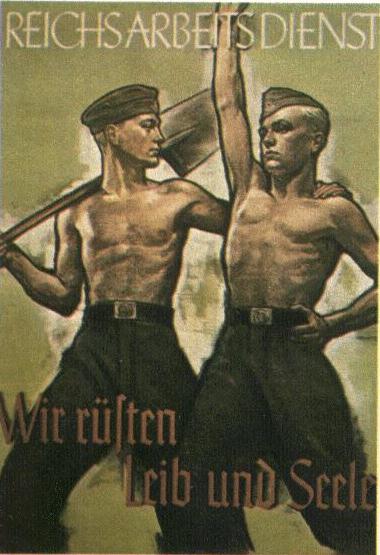
The general subjects of the images could be categorized as, “us vs. them”, “we are good and they are evil”, “we are honest and they are liars”, and “we are heroes and they are villains”. This distances the two factions and changes the core moral values of the people involved. The enemy is portrayed as a non-human force by dehumanizing and demonizing them and portraying them as rats, monsters, madmen, etc. Thus, the audience has the feeling that the other group is less than human and should be crushed without thought and without guilt.

Thus, imagery is used to numb the people and turning them from human beings to killing machines.
International Crimes Punished by Court
Genocide means any acts committed with intent to destroy, in whole or in part, a national, ethnical, racial or religious group. While attempts to destroy groups have been very much a part of human history, it has been either a description of the action or a very general concept, such as massacres or mass murder. It wasn’t until 1944 when Raphael Lemkin wrote, Axis Rule in Occupied Europe, which was the first public articulation of the concept of genocide. Today people still have a hard time classifying what is genocide and what is not. For example, the continuing debate about the Armenian genocide. This is why the International Criminal Court (ICC) was established in 1998. Now, genocide is an international crime for which individuals, no matter how high in authority, may be indicted, tried, and punished by the ICC.
This way nations can not hide behind that fact that a war is going on at the time to justify genocidal acts. This Court is also good because a nations laws or customs may excuse them in part for there actions. With the ICC no one can escape the brutality of there actions.
This way nations can not hide behind that fact that a war is going on at the time to justify genocidal acts. This Court is also good because a nations laws or customs may excuse them in part for there actions. With the ICC no one can escape the brutality of there actions.
What does an enemy look like?
Enemy is a common word. Everyone knows what it means and upon mention an example will most likely enter a person's head. But, everyone has different examples. An enemy could be some fictitious character or possibly a threatening country and its people.
We watched a film by Sam Keen that looked into this. Mr. Keen researched how different countries displayed their enemies. Many of them used the same images. It appeared to be a universal opinion that certain animals were bad and somethings always represented good.
What this really shows is that countries are not that different from one another. It was very interesting when he showed images from opposing countries that had similar cartoons. There are some things that link people from all over the world together.
We watched a film by Sam Keen that looked into this. Mr. Keen researched how different countries displayed their enemies. Many of them used the same images. It appeared to be a universal opinion that certain animals were bad and somethings always represented good.
What this really shows is that countries are not that different from one another. It was very interesting when he showed images from opposing countries that had similar cartoons. There are some things that link people from all over the world together.
Monday, October 1, 2007
How do we educate the "melting pot"?
The United States is typically referred to as the “melting pot” of cultures. We are composed of so many different cultures. With the passing of time, we have only added to the diverse range of people in the United States. The question is: how can we properly and is constantly changing and gaining more people from around the world.
The United States is such a young country and with that youth comes a lack of extensive history. There are so many people with so many backgrounds. Everyone has a different story and history. World history seems to be our history because of the diverse population of our nation. Another question come up: who is to decide what is important enough to teach and what is not? How do we educate our nation on a history that includes pieces from around the world?
The United States is such a young country and with that youth comes a lack of extensive history. There are so many people with so many backgrounds. Everyone has a different story and history. World history seems to be our history because of the diverse population of our nation. Another question come up: who is to decide what is important enough to teach and what is not? How do we educate our nation on a history that includes pieces from around the world?
Turkey & EU?
I read BBC New’s online discussion on the question whether Turkey should be allowed to join the European Union or not. Surprisingly, a Cypriot from the Greek side of Cyprus, states that Turkey should be allowed to join the EU because it would help Turkey to solve its dilemmas with Cyprus and Armenia. I find this statement rather amusing since it is said that the EU members should practice freedom of speech and take care of its citizens’ civil rights. Just today I read an article of a Turkish novelist who is put on trial because a character in her latest novel refers to the deaths of Armenians in the genocide. So, why should Turkey be given a privilege of fixing its problems only after joining the EU instead of before even considering of joining? In my opinion, there is no possibility for Turkey to join the EU before recognizing the Armenian genocide. As long as the Turkish government denies the events of the 1910’s and manipulates Turkey’s citizens, there is no room for Turkey in the EU. freedom of speech is not practiced in Turkey, which Nevertheless, I think that the European Union should put its effort on fixing the problems in Turkey and fully encourage Turkey to acknowledge the genocide and pursue to heal the relationship with Armenia.
Peacekeepers need Protection Now.
As of earlier today, peacekeeping efforts have been hurt and set back by recurring attacks by rebel forces. According to Yahoo! News:
The Peacekeepers, internationals sent by the UN, by some standards, the warring in Sudan has already produced genocide numbers in deaths. Without a firm reinforcement to the peacekeeping troops stationed in the Sudan, there is no chance that peacekeeping talks will have any success, as implementation will be out of the question. Taking down regimes and funding unnecessary wars is to create a mockery of the work and focus that needs to be directed at these third world countries where civil war has scarred the land and destroyed the lives of an entire nation. The UN, as well as its main power the United States, must get its priorities together and send support to Sudan, where it is needed now more than ever. For the Peace.
HASKANITA, Sudan - Rebel forces stormed a small African Union base in northern Darfur and killed at least 10 peacekeepers, leaving behind charred armored vehicles and bombed out barracks in an unprecedented attack on the beleaguered mission that threatened upcoming peace talks. More than 30 peacekeepers were still missing by late Sunday, indicating the death toll from the attack could rise significantly.
The Peacekeepers, internationals sent by the UN, by some standards, the warring in Sudan has already produced genocide numbers in deaths. Without a firm reinforcement to the peacekeeping troops stationed in the Sudan, there is no chance that peacekeeping talks will have any success, as implementation will be out of the question. Taking down regimes and funding unnecessary wars is to create a mockery of the work and focus that needs to be directed at these third world countries where civil war has scarred the land and destroyed the lives of an entire nation. The UN, as well as its main power the United States, must get its priorities together and send support to Sudan, where it is needed now more than ever. For the Peace.
Subscribe to:
Posts (Atom)